

Foundation Stone Requirements: What Contractors Need to Know Before Excavation
December 1, 2025
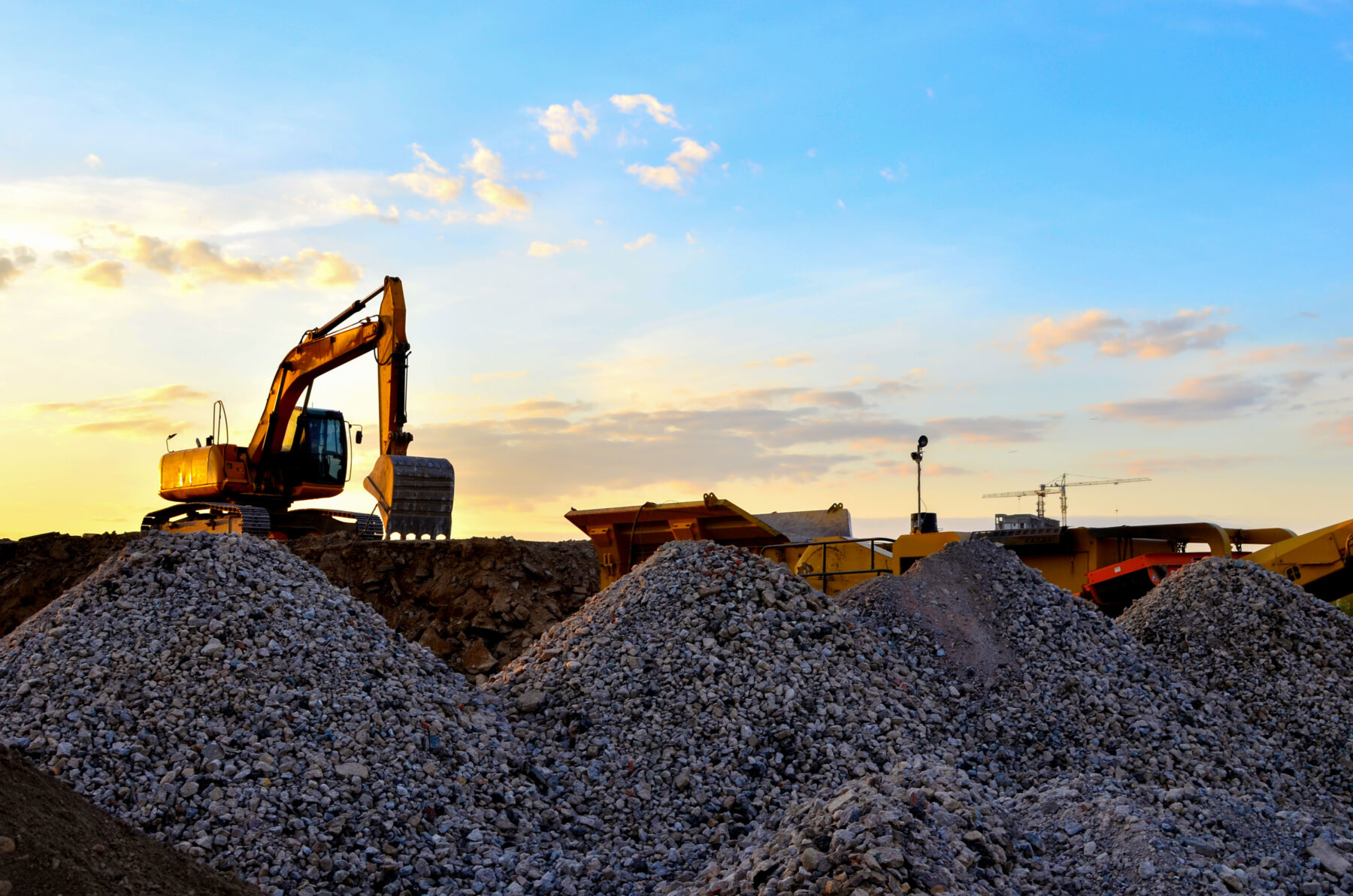
Foundation stone establishes the essential connection between ground and structure, distributing loads, promoting drainage, and supporting long-term stability. Before excavation begins, contractors benefit from evaluating material type, site conditions, and compaction requirements to ensure the base performs as intended. Taking the time to align these factors early creates a foundation built not only for strength but for consistency and endurance throughout the entire structure.
Assessing Site Conditions Before Material Selection
Site assessment identifies soil type, drainage capability, and potential load-bearing challenges that influence both stone gradation and compaction requirements. Cohesive soils such as clay demand different preparation than free-draining sandy or gravelly soils, and overlooking that difference can result in settlement or instability later. By taking core samples and reviewing geotechnical data early, contractors gain the insight needed to match stone type and depth to the structural demands ahead.
Along with soil composition, the way moisture travels through the subgrade directly affects how a foundation performs. The stone layer needs to drain efficiently while staying compact and stable. Angular crushed stone achieves this balance naturally, with interlocking edges that hold firm yet allow water to flow. When paired with a quality geotextile layer, it keeps fine soils from migrating upward, protecting both stability and drainage over time.
Choosing the Right Stone Gradation and Quality
Once site conditions are known, the next step is choosing the correct stone type and gradation. Coarse crushed stone ranging from ¾ inch to 2 inches is commonly used under foundations because it balances load distribution with void space for drainage. However, the specification should not be assumed to be universal. Heavier structures or those built on less stable subgrades may require larger aggregate to achieve proper compaction and resistance to settlement.
Material quality is equally critical. Foundation stone should be clean, durable, and free from organic materials or clay coatings that can break down over time. ASTM C33 and C294 standards provide guidance on acceptable aggregate types, but local sources may vary in density, shape, and absorption rate. Contractors benefit from sourcing stone with consistent testing records, ensuring predictable compaction behavior and performance consistency across the site.
Preparing the Subgrade for Stone Placement
Even the highest-quality aggregate will fail if placed on an unprepared subgrade. Before the first load of stone arrives, the base soil must be stripped of organic matter and compacted to the required density. Any soft spots or variations in elevation should be corrected using engineered fill to avoid uneven settlement once loads are applied.
In regions with fluctuating moisture conditions, installing a geotextile fabric between the subgrade and the stone layer protects the foundation from soil migration. This barrier maintains the separation between fine soils and coarse aggregate, preserving drainage capability and preventing the gradual mixing that weakens base stability. When combined with proper grading and compaction, this preparation creates a base that performs consistently under both structural and environmental stress.
Meeting Load and Drainage Specifications
A foundation stone layer plays a dual role, providing structural support while directing how water moves beneath and around the building. Well-managed drainage reduces hydrostatic pressure and prevents frost-related movement that can affect stability over time. To maintain this balance, contractors often grade the stone base with a gentle slope, channeling moisture away from the structure and toward designated drainage areas.
For heavy-load foundations, such as commercial or industrial buildings, compaction testing verifies that the stone layer meets density and stability requirements before concrete placement. Using vibratory rollers or plate compactors in controlled lifts ensures uniform density throughout the base. Verification through field density testing or nuclear gauge readings confirms compliance and minimizes the risk of future settlement.
The reliability of any foundation is rooted in how its stone base is prepared. When material selection, site evaluation, and compaction align with project demands, the result is dependable, lasting strength. Each layer placed with care contributes to a base that upholds the structure above it while reflecting the precision and craftsmanship that define quality construction.