

Gravel Grades Explained: Choosing the Right Material for Driveways, Pads, and Paths
February 2, 2026
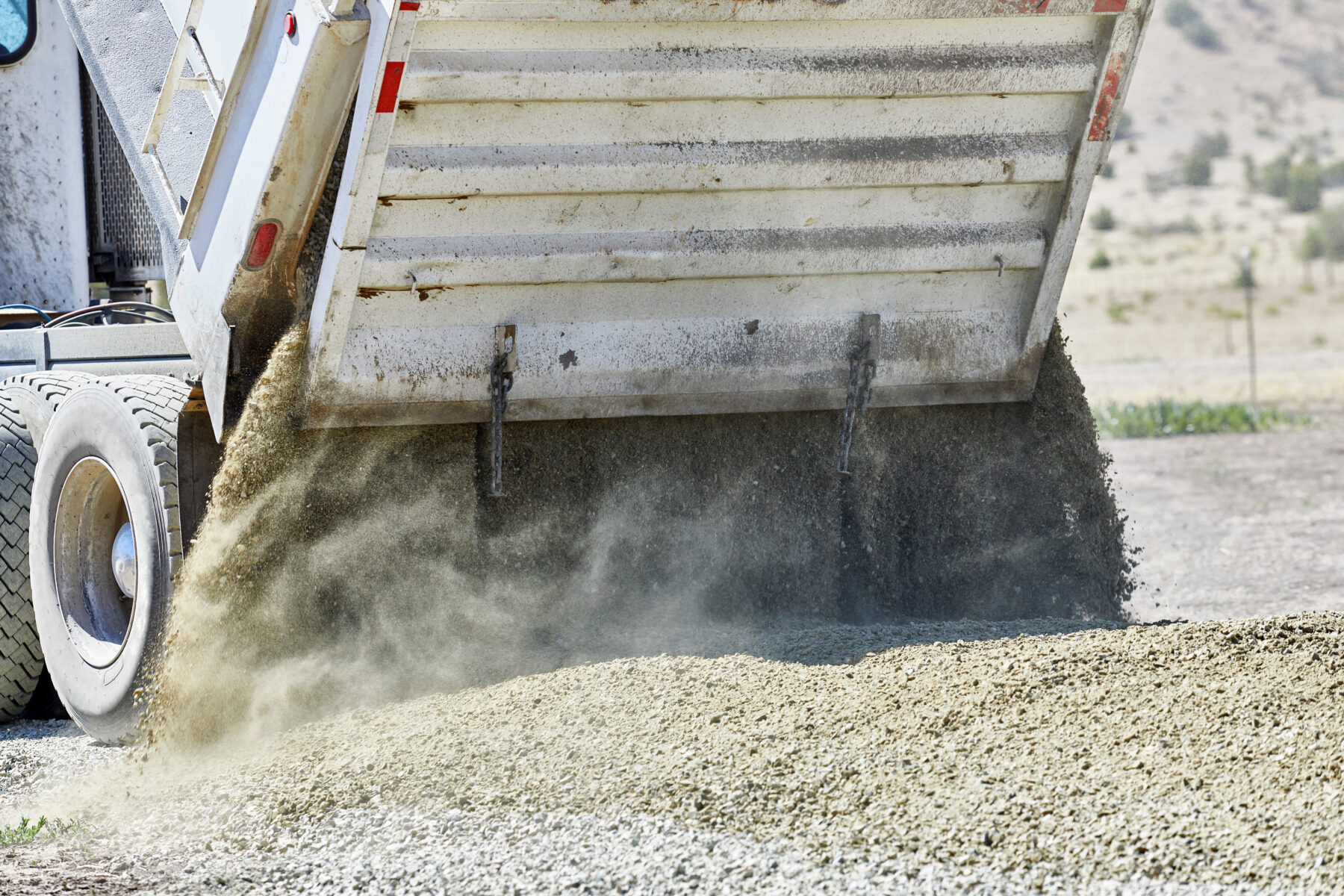
Weight, moisture, and movement place constant demands on ground surfaces. Whether supporting vehicle traffic, equipment staging, or pedestrian flow, gravel selection determines how those forces transfer through the surface and into the base below. Gravel grades are not interchangeable. Each size range behaves differently once placed, compacted, and exposed to repeated loading cycles.
Gravel grading describes the range of particle sizes within a load, including the presence of fractured stone and fines. That blend governs how tightly particles lock together under compaction, how water migrates through the layer, and how much lateral movement develops under use. Matching the grade to the application keeps surfaces stable, drains water away from critical layers, and preserves grade through seasonal conditions.
How Gravel Size and Composition Affect Ground Behavior
Particle size controls how gravel consolidates once compactive effort is applied. Larger stone creates void space that supports drainage but offers limited surface restraint on its own. Smaller material settles into those voids, increasing internal density and reducing displacement. Angular edges improve mechanical interlock, while rounded stone shifts more easily when subjected to traffic and turning forces.
Moisture response also varies by grade. Finer blends restrict water movement, which can stabilize a surface when base preparation is adequate but may trap moisture if drainage paths are limited. Coarser material sheds water quickly but requires confinement from surrounding layers to prevent migration. These physical behaviors explain why certain grades hold shape in driveways while others belong beneath pads or within paths.
Driveways That Hold Shape Under Traffic
Vehicle traffic introduces repeated loading, braking pressure, and lateral stress at turning points. Driveway gravel must resist surface displacement while maintaining crown and grade. Blended grades containing crushed stone with fines are commonly selected because smaller particles migrate into voids during compaction, tightening the structure from the top down.
Crushed limestone or similarly graded materials with a wide particle range function well in this role. Fractured faces bind together under rolling and vibration, forming a surface that reacts more like a flexible pavement than loose stone. Once consolidated, the driveway sheds water across the surface rather than allowing it to collect within the layer, reducing rutting at wheel paths.
Equipment Pads and Load Bearing Areas
Static loads introduce different stresses than moving traffic. Equipment pads, storage yards, and utility areas concentrate weight in fixed locations, often for extended durations. Larger stone becomes valuable here because it spreads compressive forces across a wider footprint and limits localized settlement.
Grades with larger nominal sizes, sometimes paired with a finer surface layer, handle sustained pressure without crushing or pumping material upward. The open structure allows moisture to move downward instead of building pressure beneath the load. When placed over a prepared subgrade, these materials maintain elevation and prevent uneven settlement beneath equipment legs or stored materials.
Pathways Built for Foot Traffic and Appearance
Pedestrian paths prioritize surface consistency, comfort, and visual control. Loose, shifting stone becomes a tripping hazard, while oversized rock creates uneven footing. Smaller gravel grades with tighter size ranges produce smoother walking surfaces while still allowing water to pass through the layer.
Materials such as compactable fines or small crushed stone settle into a firm plane once tamped. Reduced void space limits displacement under foot traffic, while angular structure resists movement along curves and slopes. In landscaped settings, these grades also maintain edge definition, keeping material within borders rather than spreading into adjacent areas.
Drainage Layers and Structural Separation
Some gravel grades do their most important work below the surface. Clean stone with minimal fines functions as a drainage layer, moving water away from load-bearing sections and breaking capillary rise from wet soils. These grades are often placed beneath driveways, pads, and slabs to stabilize moisture-sensitive subgrades.
By allowing water to pass freely, these layers reduce pressure buildup during freeze-thaw cycles and heavy rainfall events. Surface layers above remain intact because the supporting structure stays drier and more consistent. Selecting the correct grade for this role directly affects how the finished surface responds to weather and use.
Matching the Grade to the Jobsite Conditions
Soil composition, slope, drainage patterns, and expected traffic all influence gravel behavior. Clay-heavy soils benefit from thicker base layers and cleaner stone to manage moisture movement. Areas exposed to frequent turning or braking require tighter gradation to limit surface displacement. Climate also plays a role, as seasonal temperature swings influence compaction timing and moisture response.
Successful installations treat gravel as a layered system rather than a single material choice. Base stone, surface grade, and edge confinement work together to control movement and distribute load. When those components align with site conditions, gravel surfaces retain profile and elevation instead of requiring repeated reshaping.
Building Surfaces That Respond Predictably to Use
Gravel selection governs how a surface reacts to pressure, water, and repeated loading. Driveways demand interlock and surface confinement. Pads require load distribution through larger stone. Paths benefit from controlled particle size and uniform compaction. Each outcome ties directly back to grading and material composition.
Choosing the correct gravel grade converts loose stone into a surface that holds shape under real conditions. When material behavior matches application demands, surfaces maintain drainage paths, resist displacement, and retain a finished appearance through daily use and seasonal exposure.