

How Do Freeze-Thaw Cycles Affect Roads, Bridges, and Other Concrete Infrastructure?
November 1, 2026
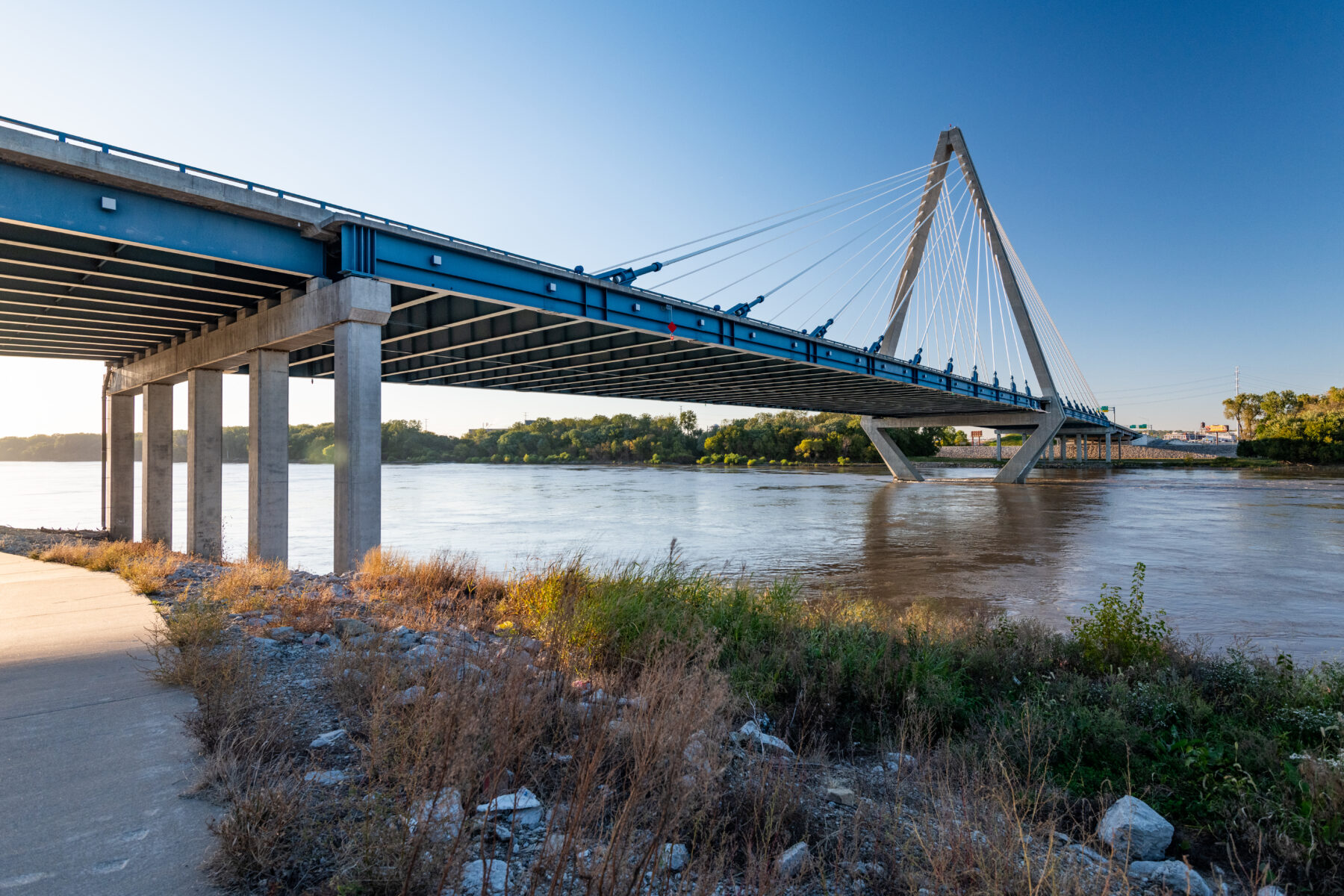
Freeze-thaw cycles put concrete infrastructure under repeated internal stress each winter. Roads, bridges, drainage structures, and curbs all take on moisture, and repeated freezing and thawing can crack, scale, or weaken the concrete over time. How much damage follows depends on how wet the concrete stays and on the stone and sand inside the mix.
What Happens to Concrete During Freeze-Thaw Cycles?
Concrete takes freeze-thaw damage through water already held in its pores. Water expands by roughly 9 percent as it turns to ice, and inside hardened concrete that expansion presses outward against the surrounding paste. A single cycle leaves little visible trace. The pressure returns with every freeze, though, and each hairline crack it opens lets a little more water in before the next one.
Saturation sets how much of that pressure the concrete can take. Partly dry concrete still has empty pore space for ice to expand into, while concrete that stays close to fully saturated has almost none. Air-entrained mixes add a network of microscopic bubbles to restore that space, which is why exposed infrastructure concrete is typically batched with entrained air. The parts of a structure that stay wet longest are where damage tends to appear first.
How Freeze-Thaw Cycles Damage Concrete Roads
Joints are the wettest part of a concrete road, so freeze-thaw damage on pavement usually starts there, where water seeps in and collects at the bottom of the slab. D-cracking begins in that wet lower zone when certain coarse aggregate particles soak up water and crack as it freezes inside them. The result is a band of fine, closely spaced cracks that runs parallel to the joint and spreads toward the center of the slab. Since the cracking begins low in the pavement, it is often well underway before it reaches the surface.
The ground under a road freezes and thaws as well. Frost heave lifts the slab when water in fine-grained soil freezes into layers of ice, and spring adds a second issue. Thaw works down from the surface while the soil below stays frozen, trapping meltwater in the subgrade and softening support right as traffic continues overhead. A compacted layer of crushed stone base rock between the soil and the slab can interrupt the upward flow of moisture that feeds ice growth and give meltwater a path out.
How Do Freeze-Thaw Cycles Affect Concrete Bridge Decks?
Bridge decks have no ground beneath them to hold warmth, and that gap puts them through more freeze-thaw cycles than the approach pavement. Cold air reaches a deck from above and below, so its surface drops below freezing sooner and more often than the road at either end. That extra exposure concentrates wear at the deck surface, where scaling, a flaking of the top layer of paste, is a common sign.
Extra water worked into a deck surface during finishing leaves the upper paste more porous than the concrete beneath it, so that layer takes on water first when the deck freezes. Expansion joints add another exposure point, since meltwater leaking through them can soak the beam ends and pier caps below. A deck placed late in the fall also needs time to gain strength before its first hard freeze, one reason a cold-weather mix often goes into late-season bridge pours.
Freeze-Thaw Damage in Culverts and Curbs
Water runs through culverts and along curbs by design, which keeps both closer to saturation than most other concrete in a road system. A box culvert can hold shallow water across much of the winter, keeping its walls and floor near saturation every time the temperature drops. Curb and gutter carries snowmelt along the road edge through the afternoon, then freezes in place overnight.
Sidewalks and other flatwork sit on thinner sections with less base beneath them, so frost heave in those areas tends to show up as lifted panels and offset joints. Stone placed around these structures goes through the same cycles as the concrete. Rip rap at culvert outlets and along bridge abutments needs dense, sound rock that resists splitting when water freezes in its seams.
How Aggregate Affects Freeze-Thaw Resistance
Aggregate makes up roughly 60 to 75 percent of a concrete mix by volume, so the stone’s own pore structure shapes how a road or bridge handles repeated freezing. Coarse aggregate with many small pores soaks up water but releases it slowly. Once those particles reach saturation, freezing water cracks the stone itself along with the paste around it, the same mechanism that drives D-cracking in pavement.
Limestone absorption can vary from one ledge of a quarry to the next, so stone for exposed concrete is judged by its source and field record rather than by size alone. Highway agencies screen coarse aggregate sources for freeze-thaw resistance through testing and service history before approving them for pavement work. Sound concrete rock keeps the stone itself from cracking, while entrained air does the same job for the paste around it.
Managing moisture exposure is central to protecting concrete infrastructure from repeated freezing and thawing. Proper air entrainment, sound coarse aggregate, and well-drained base materials each address a different source of damage. Holliday Sand & Stone supplies crushed limestone for concrete production and aggregate base applications, supporting infrastructure projects exposed to seasonal temperature changes. Contact Holliday Sand & Stone to request a quote for an upcoming project.