

How Sand and Gravel Support Proper Drainage in Active Construction Projects
April 30, 2026
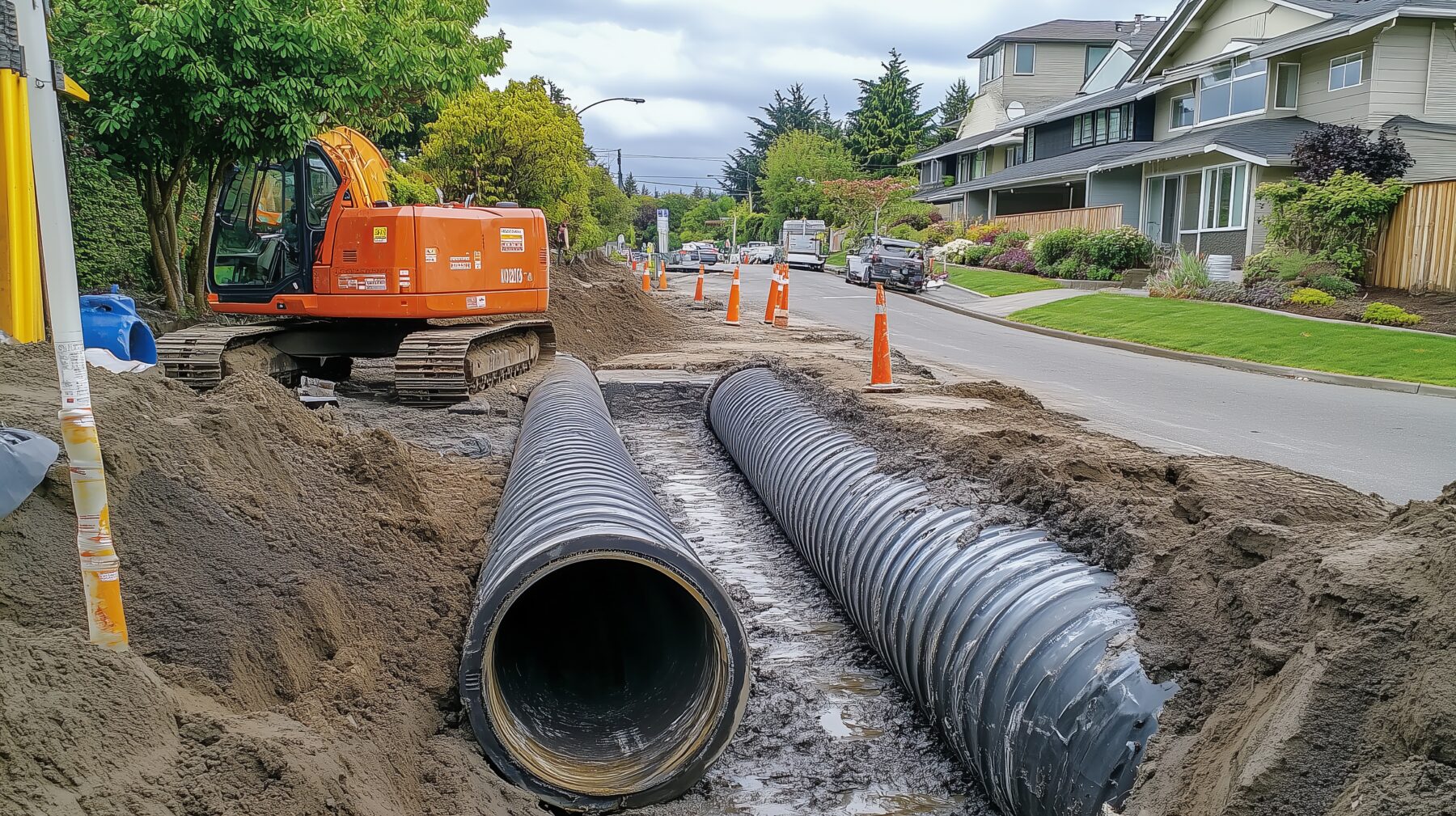
Active construction sites move on water management. Crews need surfaces that drain, base layers that stay structural under saturation, and trench backfill that carries moisture away from foundations and pipe runs. The Kansas City region adds heavy spring rainfall, sustained humidity, and clay heavy subsoils to that equation. Sand and gravel sit at the center of the answer, because the void structure between particles gives water a place to travel and a path to leave the work zone.
How Particle Shape and Gradation Move Water Through a Site
Drainage behavior in any aggregate layer comes down to the spaces between stones. Well graded sand carries fine particles that hold structure under load, while coarser gravel opens larger voids that move bulk water away from the working area. When the two are layered intentionally, the gradation steps push moisture downward through progressively wider channels, then out through perimeter collection points or daylight outlets at the lowest grade.
Particle shape factors in just as much as size. Angular crushed stone interlocks during compaction without closing off the pore network, while rounded river gravel preserves consistent flow paths under foot and equipment traffic. Both behaviors carry forward into how the layer responds when storm events hit a partially completed slab edge or trench line.
Subgrade Stabilization Before Concrete and Asphalt Placement
Subgrade conditions across the Midwest swing hard between saturated clay in spring and shrink cracked silt by late summer. A properly placed sand and gravel layer creates a capillary break, halting upward moisture migration before it reaches a slab or asphalt mat. Compacted crushed limestone bases of three quarter inch minus, paired with a clean drainage rock blanket beneath, take traffic from skid steers and ready mix trucks without rutting or pumping fines to the surface.
Placement depth typically runs four to eight inches depending on load expectations, with a geotextile separator beneath to keep clay from migrating up into the void structure. That layered approach carries directly into how the finished surface behaves once the pour is set and the site moves into the next sequence of work.
French Drains and Subsurface Collection Around Foundations
Foundation walls and footing trenches collect water that would otherwise saturate the slab edge and accelerate hydrostatic pressure against the structure. A French drain system surrounds slotted pipe with washed drainage stone, usually three quarter inch to one and a half inch clean, which moves water laterally toward a sump or daylight discharge. Pea gravel placed above the larger stone caps the system without clogging the void network, since its rounded shape resists packing under backfill load.
Non woven filter fabric wrapped around the trench keeps silt and clay particles from infiltrating the drainage envelope, which protects the flow path through repeated wet cycles. The same principle scales up for elevator pits, basement perimeters, and retaining wall back drains where saturated soil pressure becomes a structural concern.
Surface Drainage and Erosion Control During Active Earthwork
Open earthwork phases generate runoff faster than vegetation or paving can manage. Coarse aggregate placed at construction entrances, swales, and slope toes intercepts sheet flow and slows velocity before sediment leaves the site. Riprap sized between three and twelve inches dissipates concentrated flow at culvert outfalls and detention basin inlets, where focused water would otherwise scour soil and undermine grade.
Temporary haul roads and equipment pads carry their own drainage demand. A base of crushed stone over a coarser drainage layer lets storm events pass through without softening the working surface, which keeps trucks moving and reduces the rework cycle that follows a saturated subbase.
Backfill and Utility Trenching With Free Draining Material
Utility trenches beneath active sites move water laterally along the pipe zone whenever rain hits open excavations. Clean sand bedding placed beneath and around water, sewer, and conduit lines protects the pipe from point loading while conducting infiltrated water along a controlled path to the trench drain or stub outlet. Above the bedding, a select gravel backfill compacts in lifts to support surface loading without trapping moisture against the pipe.
That combination prevents settlement at trench scars, which is where pavement failures most often appear after the first freeze thaw season following construction. The same bedding and backfill approach extends to storm structures, catch basin tie ins, and lift station connections where ongoing groundwater movement is part of normal service conditions.
Material Selection for Regional Conditions
Kansas and Missouri job sites contend with freeze thaw cycling, expansive clays, and rainfall events that can exceed two inches in a single afternoon. Aggregate selection accounts for these conditions by favoring washed materials that resist clogging, angular crushed limestone that locks into place under load, and properly graded sand that carries water without losing structural support. Site teams matching mix to subgrade behavior and drainage path geometry see fewer pumping issues, less rework on base layers, and faster turnaround between weather windows.
Holliday Sand & Stone supplies the washed sand, drainage rock, crushed limestone, and pea gravel that keep active sites moving through the wet season and into the next phase of work. Reach out to discuss material specs and delivery scheduling for the next important project.