
Playground Sand, Arena Sand, and Utility Gravel: Choosing the Right Material for Outdoor Spaces
April 1, 2026
The materials you choose for outdoor spaces can make or break their functionality, and the wrong choice becomes obvious once they’re put to use. Playgrounds, equestrian arenas, and utility areas each impose distinct demands on the materials beneath and around them. Surface softness, drainage rate, particle shape, dust control, and compaction resistance all factor differently depending on what the space is designed for. Material selection made at the front end avoids the corrective work that follows when an outdoor surface is built on the wrong foundation.
Playground Sand for Impact Standards and Surface Specification
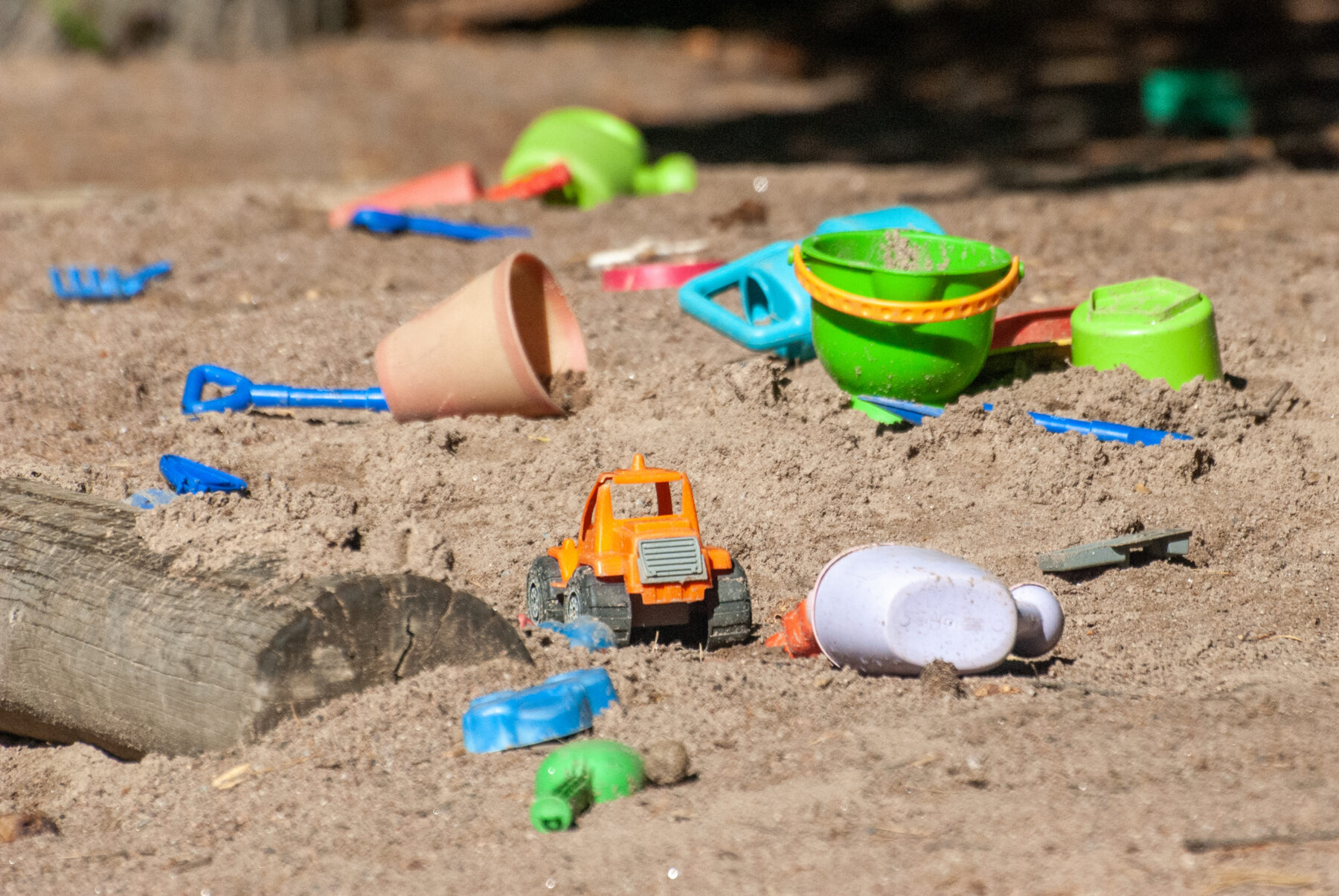
Playground sand is specified for impact attenuation, not just surface appearance. Under playground equipment, the primary function of the sand layer is to reduce injury severity from falls, and that function depends on the depth, gradation, and maintenance state of the material. The American Society for Testing and Materials (ASTM) F1292 standard establishes impact attenuation requirements for playground surfacing materials, and materials that meet those requirements only do so when installed at the correct depth and maintained free of compaction and contamination.
Washed, rounded particle sand holds up better in playground applications than angular crushed sand because rounded particles do not interlock under foot traffic the same way angular material does, preserving looseness and cushioning through regular use. Particle size gradation matters as well. Coarser playground sand that drains freely while maintaining surface looseness resists crusting after rainfall better than fine material with limited void space. Fine silica content should be evaluated, because prolonged exposure to fine silica dust carries respiratory concerns, and low-silica playground sands are available specifically for settings with children.
Depth maintenance is ongoing. Playground sand compacts and migrates under use, particularly at high-impact landing zones beneath swings and slides, and periodic raking and depth verification keep the surface at the specified depth and cushion grade.
Arena Sand for Drainage, Footing, and Particle Geometry
Equestrian arenas and sports surfaces that rely on sand footing carry a different set of material demands than playground applications. Arena sand must hold consistent footing across the surface without packing hard or staying loose to the point of instability. The balance between firmness and give is what protects both horse and rider during repeated, concentrated impact from hooves.
Particle shape and gradation are the primary variables in arena sand selection. Angular particles develop more interlock and surface firmness under compaction, holding well in high-traffic arenas under heavy use. Rounded particles drain more freely and retain looseness longer but may shift laterally under load in ways that create uneven footing. Many arena installations blend particle shapes to capture drainage from rounded gradations while retaining the surface stability that angular content contributes.
Drainage design under the arena surface determines how well any sand footing functions. Poorly drained arenas compact quickly when wet, harden when dry, and create inconsistent footing conditions that change through the day. A properly graded base with adequate slope and drainage infrastructure gives the sand layer above it a stable foundation to function consistently regardless of precipitation. Installing the right sand over an inadequate base undermines the footing regardless of product quality.
Dust is a secondary concern in enclosed or semi-enclosed arena environments. High-silica sands or overly fine gradations generate dust under hoof traffic that affects air quality and rider visibility. Coarser gradations or arena sands with low fines content reduce dust production without compromising footing consistency.
Utility Gravel for Access, Drainage, and Base Stability
Utility gravel applications encompass a broad range of site functions: access paths, drainage channels, utility corridors, equipment pads, and unpaved parking areas. Site demands vary by application, but crushed angular aggregate consistently outperforms rounded stone in load-bearing and access surface uses because of the mechanical interlock that develops under compaction.
Clean crushed stone in the 3/4-inch to 1-inch range delivers drainage, surface stability, and a workable surface underfoot or under light vehicle loads on access paths and light-traffic areas. Fines content in the aggregate affects both drainage and dust behavior. Clean washed stone with limited fines drains freely and does not track into adjacent areas as readily as products with higher fines content. Where some cohesion is needed on a slope or uneven grade, road base or crusher run with controlled fines develops better lateral stability than clean stone.
Drainage applications around outdoor structures, along foundation perimeters, or in swales rely on washed drainage stone sized to match the surrounding soil infiltration rate and pipe slot sizing where drain pipe is installed. Mismatched aggregate gradation and drainage infrastructure block flow paths at the interface, restricting infiltration and accelerating clog formation under normal site drainage loads.
Equipment pads and utility support areas require compacted angular base course to carry the bearing loads that loose or rounded aggregate cannot match. Compaction develops the particle interlock needed to resist settlement under static and dynamic loads, giving a surface that holds through seasonal ground movement.
Matching Material to Project Requirements
Playground sand, arena sand, and utility gravel each respond to different site conditions, and treating them as interchangeable produces surfaces that fall short from the day they are installed. Material selection should account for the intended use, site drainage conditions, maintenance expectations, and any safety standards that apply to the space.
As a local aggregate supplier familiar with regional material characteristics and site conditions, Holliday Sand & Stone can match products to project specifications more accurately than a catalog selection made without site context. Particle gradation, fines content, silica levels where relevant, and drainage compatibility confirmed before the order is placed set outdoor surfaces up to function through the seasons ahead without reactive correction.