

What Is Bedding Sand and Where Is It Used in Construction?
September 30, 2026
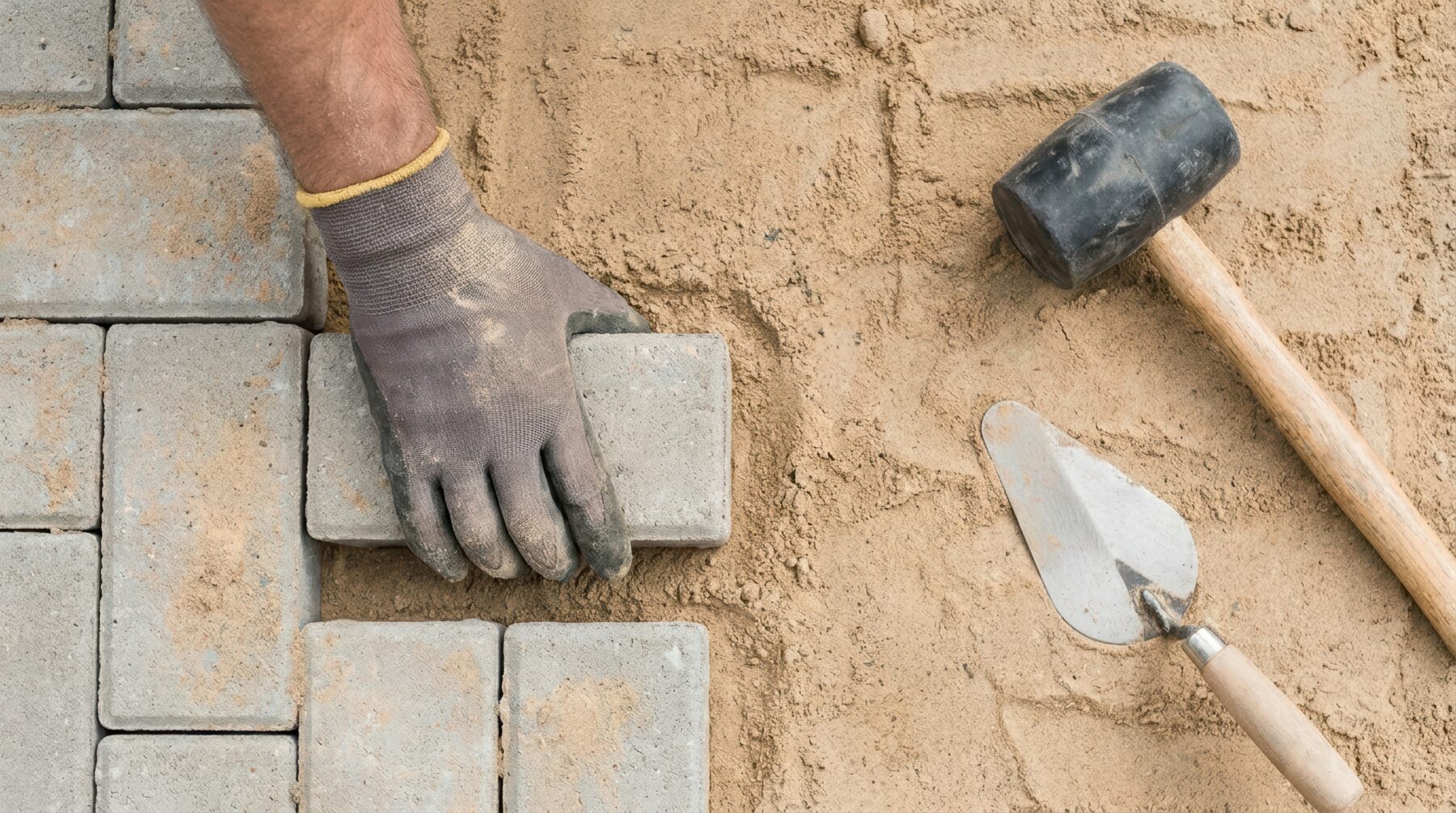
Bedding sand forms the setting layer that goes down before a finished surface, giving pavers, slabs, and other work a level, stable plane to rest on. Its performance depends less on the label it carries and more on how tightly its particle sizes are controlled. The sand that seats a paver system well is not always the right material beneath a slab or around a buried pipe.
What Grain Size Makes Good Bedding Sand?
A narrow, consistent range of particle sizes is what makes sand perform as bedding material. That controlled gradation lets the layer compact into a firm, even plane rather than settling unevenly once weight presses down, while still leaving enough space between particles for water to pass through instead of pooling.
Gradation is measured, not estimated. A lab shakes a sample through a stack of screens and weighs what stays on each one, producing the size profile that defines whether a sand meets a bedding specification. A product with a tightly held gradation behaves predictably under load. One with a wide or inconsistent range shifts, compacts unevenly, and pulls pavers or slabs out of plane over time.
How Does Bedding Sand Work Under Pavers?
Beneath pavers, bedding sand sits between the compacted aggregate base and the finished surface, forming the final setting layer. Screeded to an even depth before the pavers go down, it gives each unit a level, consistent seat instead of resting directly on the rougher base below.
That same narrow gradation is what keeps the layer stable under repeated traffic. Bedding sand beneath concrete pavers is commonly screeded to about one inch after the base has been compacted and brought to grade. That depth should stay consistent across the installation rather than built up in low spots, since excess sand settles and shifts differently under load and leaves individual pavers uneven.
Deeper applications, including slabs and buried utilities, follow different specifications based on the material above, the prepared subgrade, and the loads the layer has to carry.
What Material Is Used for Pipe Bedding?
Sand is not always the right material around buried pipe. Water, sewer, and utility lines need uniform support along the trench, and larger pipe or heavier loading often calls for crushed stone instead. A graded crushed limestone, such as a three-quarter-inch by half-inch blend, forms a stable cradle around the pipe while limiting direct contact with larger, irregular material that could concentrate pressure at a single point.
Placement and compaction carry extra weight here. An evenly placed and properly compacted bedding layer is what keeps the pipe supported through freeze and thaw cycles rather than loaded unevenly along its length.
How to Match Bedding Material to the Job
The right bedding material depends on what sits above it. A paver system, a slab, and a length of pipe each place different demands on the layer beneath them, so matching the material means starting with the load and the surface, then selecting the grain size and drainage behavior that suit it.
One detail worth checking: the same product name does not always describe an identical material from one plant to the next. Mason sand, for example, can run finer from one production location than another, a difference that matters on a masonry setting bed where consistency counts. Confirming the gradation for a specific application, rather than relying on the label alone, keeps the finished layer performing the way the spec intends.
Holliday Sand & Stone produces concrete sand, mason sand, and crushed limestone bedding to controlled gradations. To match the right bedding material and quantity to an upcoming project, request a quote.